
Find Lompoc Residents by Question
Every good Lompoc residents directory search starts with a question, not a name. Name the question first. A parcel search reveals the situs, the APN, the transfer date, any improvements, and a recorder document number. Yet it never displays an owner or proves who actually sleeps there. The recorder goes further, exposing indexed parties to a recorded instrument. A court register lists public case events. A historical directory places a household between census years. Each of those is a different kind of evidence. Each belongs to a different office. Need a current address lead? Move from parcel to document. Then test the answer against the relevant public record. Family history works in reverse. Begin with a directory, newspaper, obituary, or census, and let official records confirm the link. When you already know the person, anchor the match with two independent details. A middle initial, a spouse, an APN, a business, a date, or a case number all work. That sequence keeps a broad search from collapsing into a same-name error.
- Write down the starting clue and its date, such as a street, surname, old address, or family connection.
- Use the Santa Barbara County Assessor Parcel Search for a known situs, APN, house number, unit, and suffix-free street name.
- Follow a transfer document into the Santa Barbara County Official Records Search; use a name, date, document, map, or advanced party search.
- Use My Voter Status only for the voter completing the identity check, not as a public street list.
- For older households, compare the library and historical collections, then request a missing or restricted record from the custodian.
When the target narrows from a whole location to one person, the Lompoc resident search page gathers the verification steps in one place. Address-first work belongs in the Lompoc by-street records workflow instead.
Offices Behind the Lompoc Residents Directory
Lompoc records split across four levels of custody. The county carries the main address-and-identity layer: deeds, parcels, vital copies, elections administration, and Superior Court matters. City departments add permits, planning, police records, and zoning. California contributes statewide vital copies, voter status, licenses, business filings, prison records, and privacy programs. Federal courts and census schedules cover a separate historical or federal case trail. The office matters as much as the search term. An assessor parcel card is not a deed. A voter file is not a public name directory. A court portal never replaces the clerk's terminal. The cards ahead point to the first official door for each kind of resident evidence.
Santa Barbara County Clerk-Recorder
Deeds, liens, maps, marriages, FBN filings, and vital copies
1900 to current stated by live index
Official Records Search
Santa Barbara County Assessor
APN, situs, transfers, improvements, values, and exemptions
Free parcel search; owner name not online
Assessor Parcel Search
Santa Barbara County Elections
Registration help and qualified voter-file requests
Elections: 805-568-2200
California My Voter Status
Santa Barbara Superior Court
Civil, family, probate, small claims, traffic, and public case events
Lompoc civil/family: 805-737-5452
Court Records
For city-held material, four offices handle the routing. The Lompoc Building Division, Planning, Police Records Bureau, and City Clerk each take requests by record type. Keep one caution in mind. A permit applicant, contractor, or correspondent of the city is not automatically a resident. Treating them as such distorts the record. That distinction matters. It is what keeps a Lompoc residents directory honest about what each document actually says.
Note: The county and state offices answer different identity questions, so a result should be labeled by its custodian before it is reused.
The first image shows the county Clerk-Recorder records hub, the front door for deeds, marriage records, fictitious business names, and other county-held records. Open the Clerk-Recorder office hub to confirm the current route.
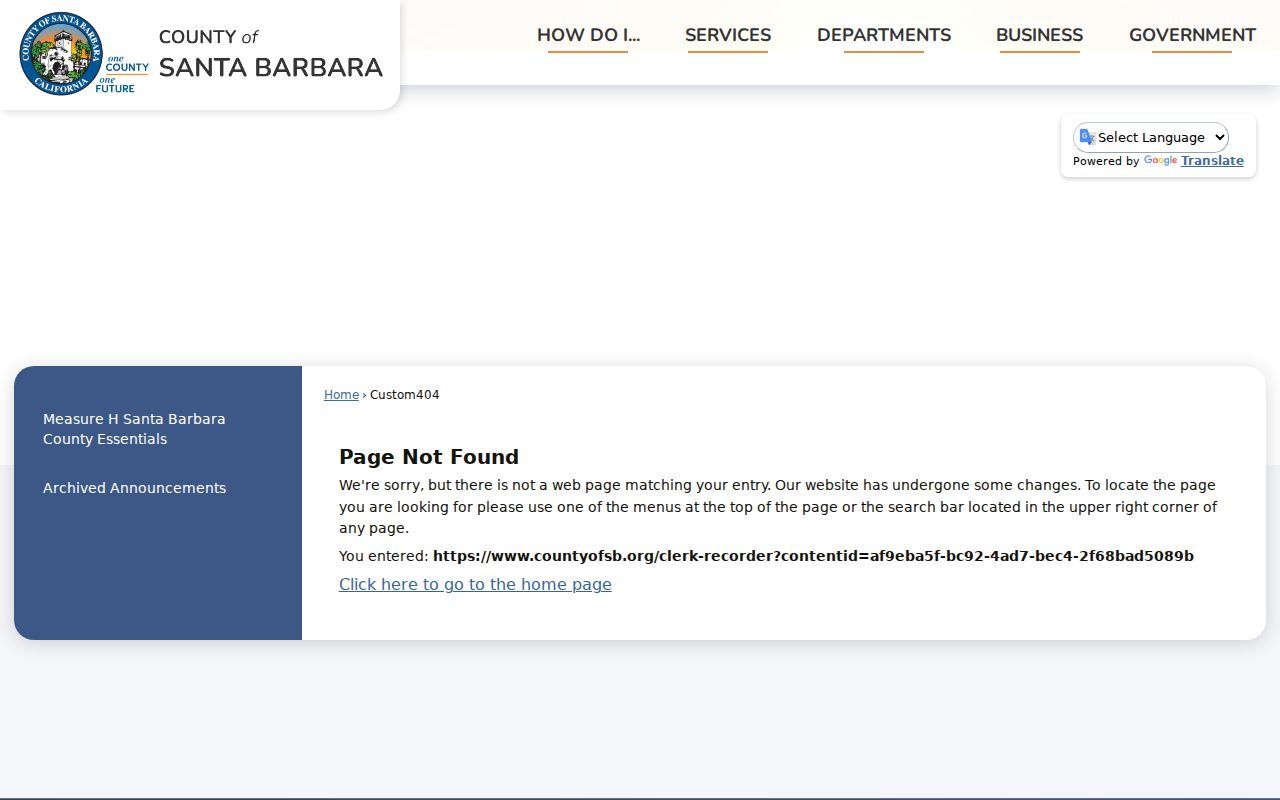
The county hub is an orientation page, not a resident roster. Its real value is picking the right keeper before any name or address search begins.
[RESEARCH GAP: The manifest has no successful assessor or voter-status screenshot assigned to the home page. Use the linked official interfaces for current captures.]
Lompoc Deed Trails in the Recorder Index
The live Recorder Name Search states that its indexed documents run from 1900 through the current update date, while county explanatory material still splits off a post-1975 path and a 1931-to-1974 historical index. Read those as two access routes to reconcile. Neither one promises every image is online. Searching the index is free; copies are listed at $10 per document, with certification at $2 more. Names go in as recorded. Individuals search best as LAST FIRST. Organizations should be entered in their recorded form. The advanced screen narrows the date range and party role, and its syntax earns its keep on older records full of initials, alternate spellings, and inconsistent trust names.
| Recorder field | How it helps a Lompoc search |
|---|---|
| Name | Search an individual or organization as indexed. |
| Recording Date Start / End | Limit the result to a transfer or record era. |
| Both Names | Look for two parties connected to one instrument. |
| Grantor / Grantee | Separate the person giving an interest from the person receiving it. |
| Document Type | Focus on a deed, deed of trust, release, lien, map, or other instrument. |
| Advanced syntax | Use + for a required word, - to exclude, $ for sound-alike, * for starts-with, and ~ for fuzzy matching. |
Bridge from the assessor's document number, then save the recorder number. Save the legal description before ordering anything. A certified copy confirms the official instrument matches your copy. It proves nothing about present occupancy. If a chain reaches earlier books, ask the Clerk-Recorder archive or counter about the historical index. Ask about pre-1900 material there, rather than filling the gap with a guess.
Note: The recorder index is an index and access tool, not legal advice, a title report, or a complete list of people at a parcel.
Lompoc Assessor Fields and Limits
The Santa Barbara County Assessor Parcel Search takes a parcel number or a house number with street name, skipping suffixes like St, Ave, or Blvd entirely. Results sort by parcel number or street. A bare street query can return hundreds of parcels, so add a house number, jurisdiction, or map clue before trusting a result. A parcel detail can show the APN, situs address, transfer date, recorder document number, tax-rate area, use, jurisdiction, acreage, an assessor-map link, improvement details, values, exemptions, and a tax breakdown. One thing stays off the public card: the owner name and owner mailing address. Situs means where the parcel lies. A mailing address means where tax correspondence goes. Neither alone identifies every household member.
- APN
- The assessor parcel number that ties a land record to the county parcel system.
- Situs
- The physical location of the parcel, not proof that a named person lives there.
- Transfer document
- The recorder instrument number that can lead from a parcel card to an indexed deed or related record.
- Homeowner exemption
- A tax-roll clue that may support an owner-occupancy hypothesis, but it is not a resident roster.
Revenue and Taxation Code section 408 governs what the Assessor may let the public inspect. Ownership and mailing information carry conditions. Ask before assuming. A missing owner name does not mean a missing owner, and a mailing address is not proof of a Lompoc residence. For a full address chain, work from the assessor parcel onward through GIS, the recorder, permits, and historical directories.
Lompoc's Present-Day Resident Sources
No single public Lompoc residents directory lists every household. Current sources answer narrower questions instead. A parcel card pins down land and its property facts. A deed index names the parties to recorded instruments. My Voter Status confirms registration for the person who authenticates. City permits can tie an address to a project. Police records can tie it to a releasable incident. Business and license searches reveal a professional or commercial affiliation.
The coverage table keeps those roles distinct. It also reminds a Lompoc researcher that a record can be public. A person-level conclusion is not supported.
| Source | Evidence | Keeper | Access and boundary |
|---|---|---|---|
| Assessor parcel card | APN, situs, transfer, improvements, values | Santa Barbara County Assessor | Free web search; no owner name or mailing address online |
| Recorder index | Parties, instrument type, date, legal or map clues | County Clerk-Recorder | Free index; copies and certification have listed fees |
| My Voter Status | Registration status, polling and ballot details for the authenticated voter | California Secretary of State | Self-lookup; not a public name or street search |
| City permit or police record | Project, incident, address, applicant, or releasable event detail | City of Lompoc | Portal, email, phone, or CPRA request; exemptions apply |
| Business or license result | Entity, agent, license, discipline, or business address | California SOS, DCA, or county FBN desk | Affiliation evidence, never automatic residence proof |
Treat a name-only result as a lead, nothing more. A strong match leans on at least two anchors and keeps the record's date and role in view. A Lompoc residents directory built from mixed sources should label each entry as a recorded party, parcel, registered voter, licensee, or historical occupant. Collapsing those labels invites error.
Lompoc Voter Status Is Personal
California My Voter Status is a self-lookup that authenticates identity. The form requests first and last name plus date of birth. It also takes a California driver license number when available. A state ID number works too. The last four digits of an SSN are another option. In return it can show registration status and location. It can also show party and language preference, mail or provisional-ballot status, and a polling place. Upcoming election details appear there as well. County contact information is included for the person completing the check.
California Elections Code sections 2188 through 2194 control access to the voter file. A qualified requester may apply for a file for limited purposes. Election work is one of them. Scholarly, journalistic, political, and governmental uses also qualify. The application demands requester identity and a precise purpose. It also requires product choices, scope, ID, and a security and use certification. Driver-license numbers, SSN fragments, unique identifiers, and signatures stay excluded. A personal street browse is not an authorized path.
That distinction matters for any Lompoc residents directory. Registered describes a voter record, not a guarantee of current occupancy. An inactive status does not prove a person moved. Safe at Home and confidential voter rules can suppress or substitute an address. These protections apply where identity or address protection is in place.
Practical check. Use the voter tool for your own status. For another person's record, use the official purpose and eligibility rules rather than treating a restricted file as a neighborhood list.
Note: A voter status result describes registration administration, not current occupancy or a public street roster.
Lompoc Court Records Beyond the Online Index
Santa Barbara's Superior Court Case Information service opens several public categories to anyone searching, including civil, criminal, family, probate, small claims, and traffic registers, each with confidentiality and sealing limits. The Civil Portal carries allowable civil entries along with non-confidential images. Family and Probate materials sit in the Public Portal. Phone and email staff will not confirm a party's date of birth, address, driver-license number, or SSN fragment, the court warns.
A local gap shapes Lompoc searches. No online criminal index exists, so the Lompoc Courthouse public terminal or a written copy request serves as the fallback. The courthouse sits at 115 Civic Center Plaza, Lompoc, California 93436-6967, open Monday through Friday, 8:00 a.m. to 3:00 p.m. Civil and family records use 805-737-5452, and criminal records use 805-737-7789.
The county's records-access information appears on the Superior Court's records page. Review the Superior Court records page before relying on any category or request route.
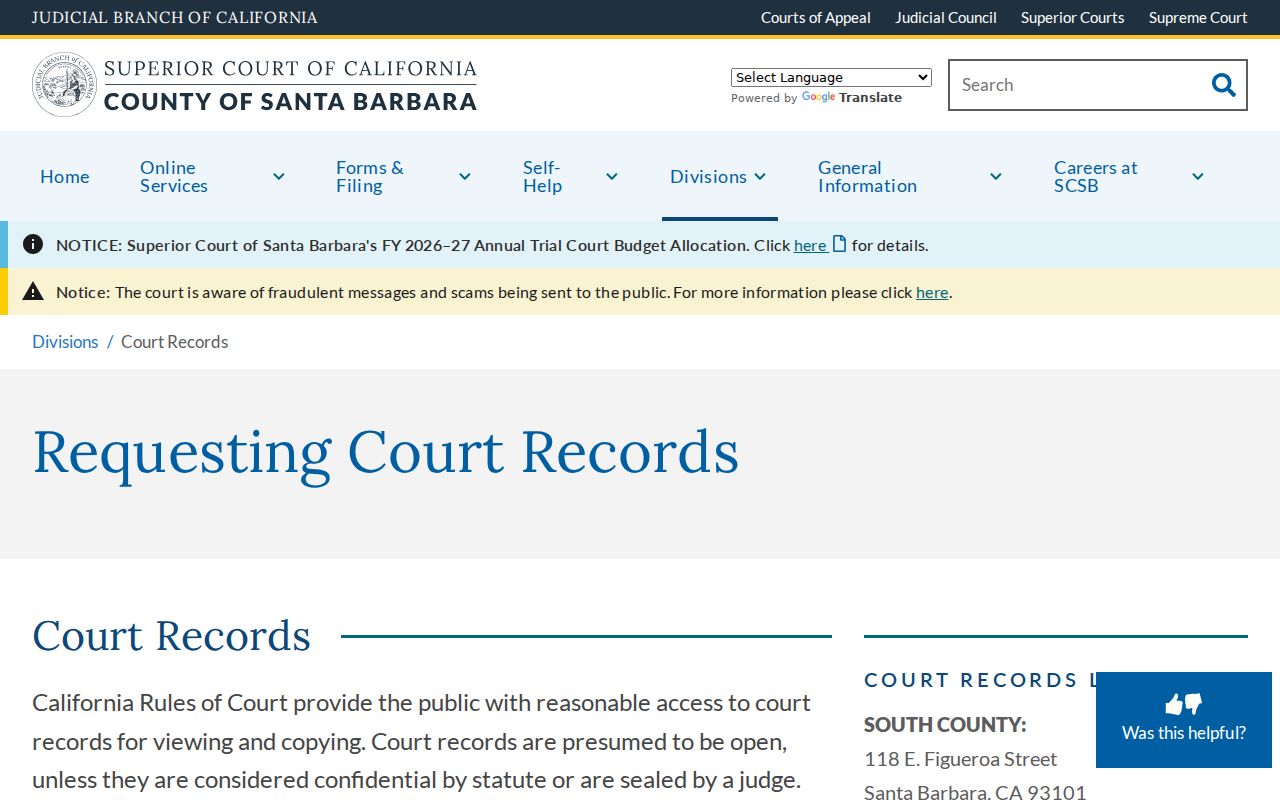
The public records page frames a case search as a register and copy process. It is not a blanket confirmation of a person. Certification is listed at $25. A records search taking more than ten minutes is listed at $15. The local courthouse page links the online path to the terminal and counter route, so check Lompoc Courthouse services and location for current division information.
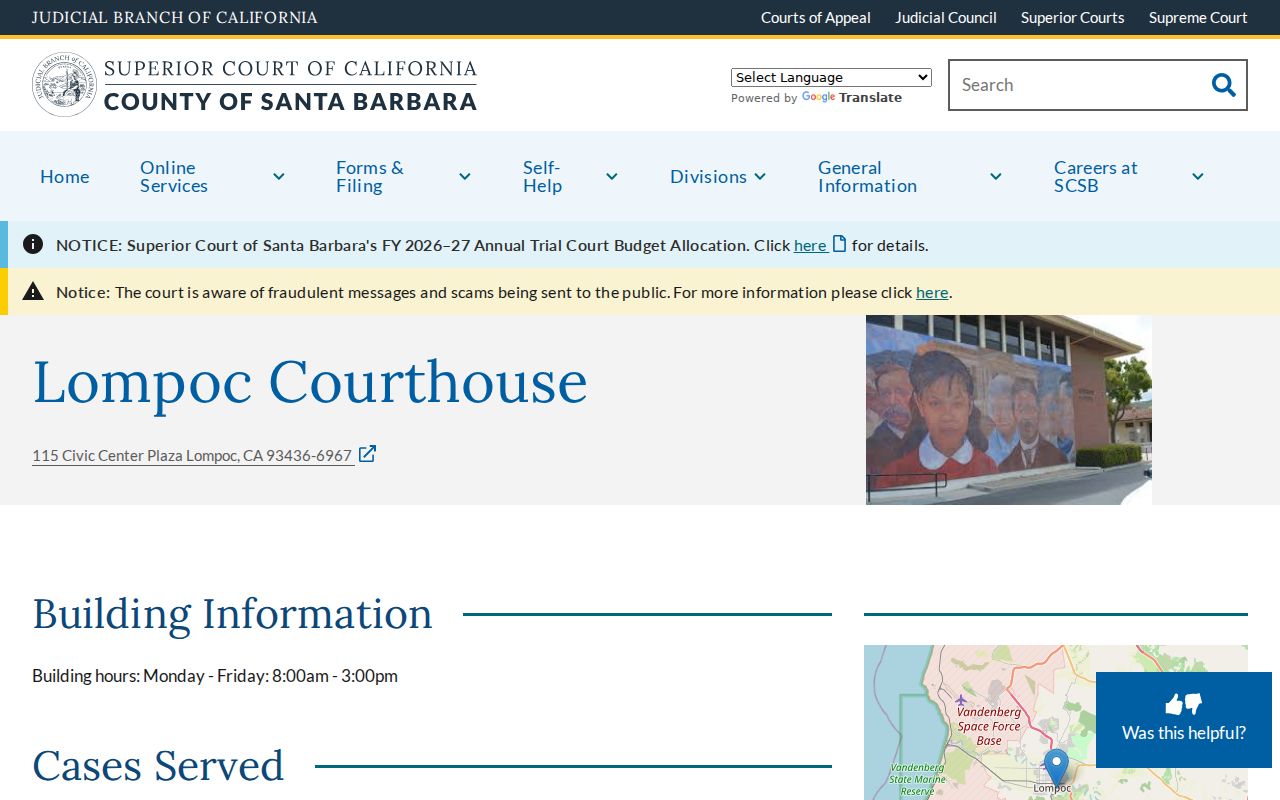
Small claims for the Lompoc venue have been handled at the Cook Division in Santa Maria, not the Lompoc counter, since September 1, 2013. That venue detail can prevent a wasted request.
Federal matters run on a separate track. The PACER index covers the U.S. District Court for the Central District of California, with account and usage-fee rules. The federal image belongs to that distinct trail.
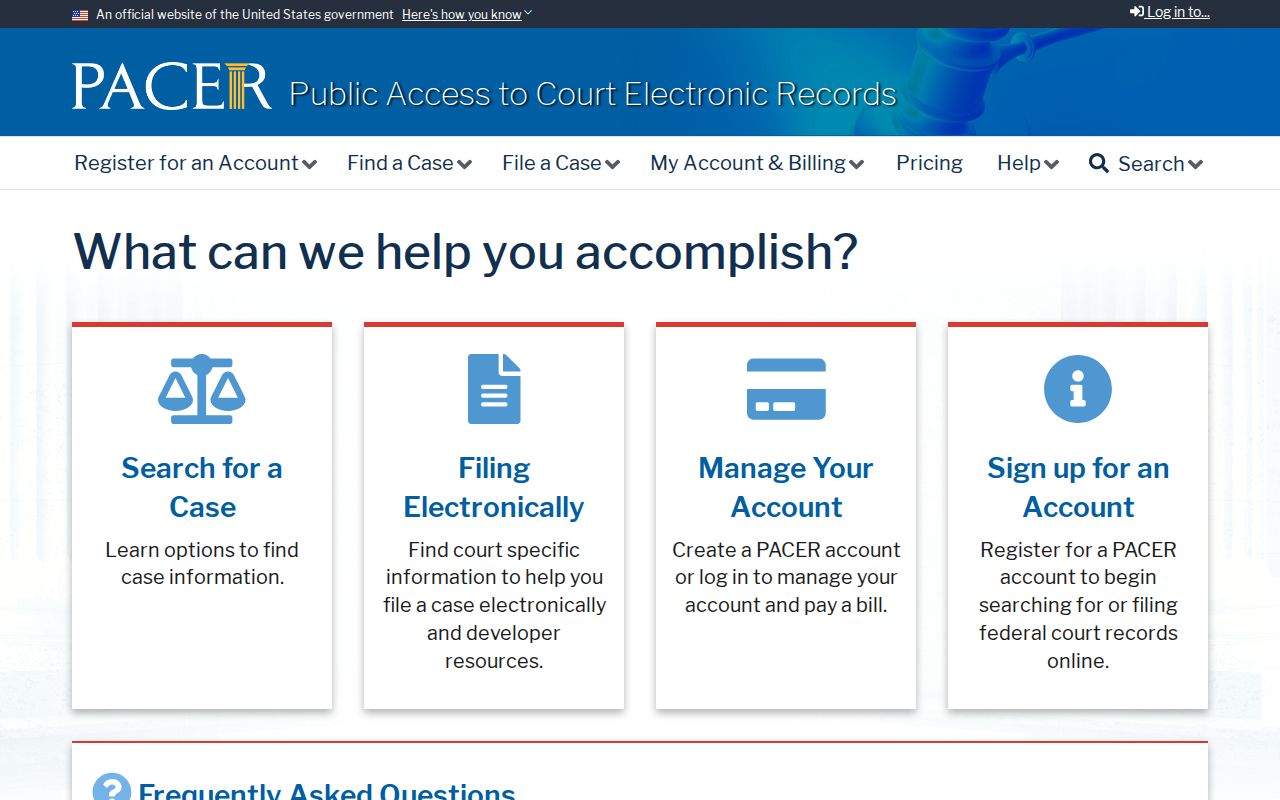
PACER can add a docket or filing to a carefully matched identity trail. It does not replace Santa Barbara County court records or the Lompoc terminal.
Note: Court access changes by case category and venue, so record the portal, division, and access route with each result.
Vital Records for Lompoc Families
Vital records in California sit with several custodians. Santa Barbara County issues county birth, death, and marriage copies. Its official pages describe death and marriage holdings from 1850 through current county events. The California Department of Public Health Vital Records office supplies statewide birth, death, fetal-death or stillbirth, and marriage products. It also handles limited dissolution products. Divorce judgments come from Superior Court. A CDPH Certificate of Record for a dissolution is not the decree.
California offers authorized and informational certified-copy paths. These run under Health and Safety Code sections 103525 and 103526. An authorized copy proves identity. Form VS 111, the birth-copy request, asks for the subject's name, sex, birth date and place, parent names, requester relationship, purpose, copy count, and signature. It also requires a sworn statement. A mailed authorized-copy statement must be notarized. An informational copy is marked not valid for identity.
The 2026 state fee schedule sets $31 for birth, $26 for death, $19 for marriage, $23 for fetal death, and $28 for stillbirth. A dissolution certificate costs $18. A no-record response keeps the fee as the statutory search charge. Confidential marriage records go only to the parties or by court order. Adoption files stay sealed. Sealed original birth records remain restricted too.
The statewide vital-records information page spells out ordering. Review California Vital Records instructions before sending a nonrefundable order.
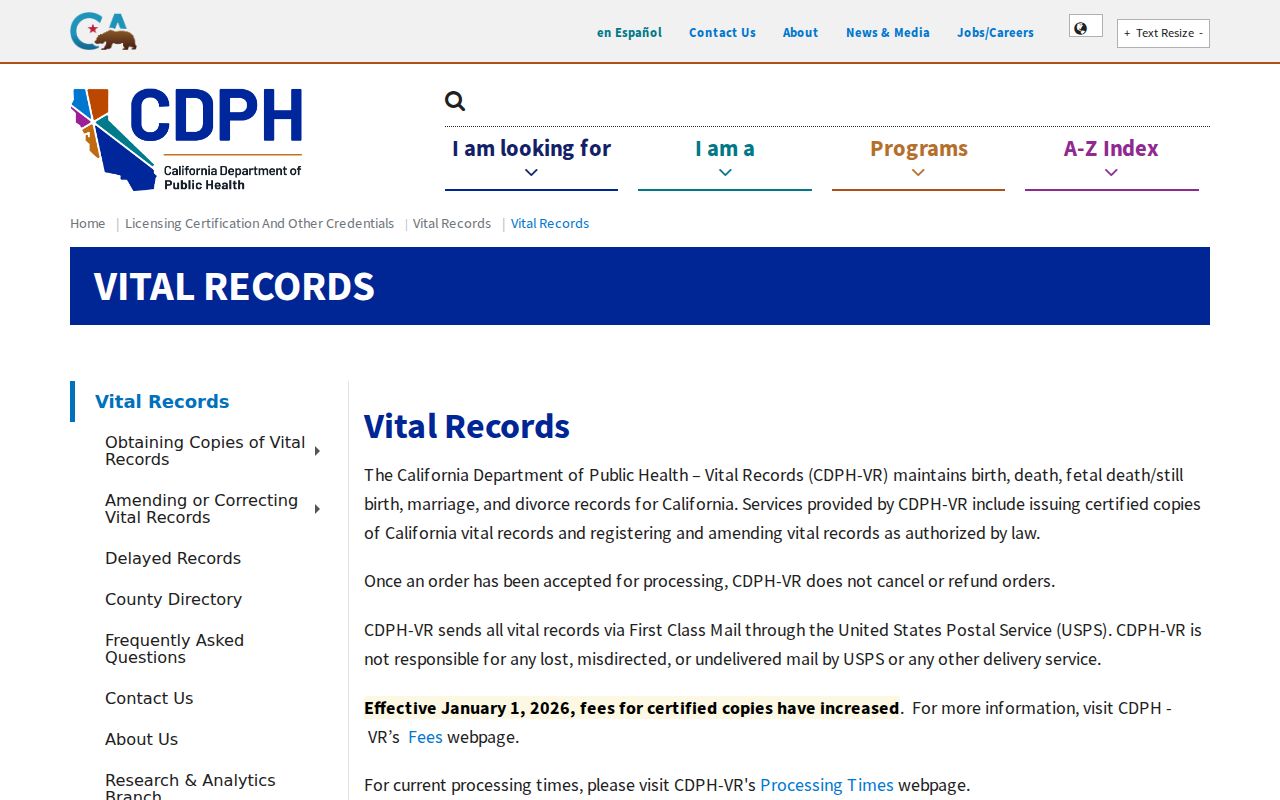
Family reconstruction works best when a permitted vital copy is paired with the 1915 to 1919 Lompoc FamilySearch catalog, newspapers, cemetery leads, directories, and probate. Each source supplies a clue. None should be stretched beyond its stated role.
Note: A certified or informational copy has its own eligibility and purpose rules, so the application route matters as much as the event date.
Public Records Requests in Lompoc
The California Public Records Act is the fallback. It now sits at Government Code sections 7920.000 and following. Agencies normally make a disclosure determination within 10 calendar days. Unusual circumstances can add up to 14 more days. Inspection is ordinarily free, though copies can be charged at direct duplication cost.
A focused request works faster. Name the department, record type, address or APN, incident or permit number, date range, and preferred electronic format. The Santa Barbara County public-records portal accepts a narrow request for an existing county record. CPRA is not a substitute for ordering a certified vital copy or a recorded instrument through its custodian.
The Lompoc Police Records Bureau takes requests three ways. Use a web form, email at lpdrecords@ci.lompoc.ca.us, or phone at 805-736-2341. Email delivery costs $0. Paper runs $0.20 per page. A USB is $2. Card payments carry a 3.75% processing fee. Reports can still be withheld or redacted. Victim, witness, juvenile, medical, confidential criminal-history, and active-investigation reasons all qualify.
| Route | Best use | What to state |
|---|---|---|
| Official portal | A record set already indexed online | Use the portal's fields and save its document or case number |
| Counter or terminal | Older books or a court category absent online | Bring the name, date window, record type, and photo ID when required |
| CPRA request | An existing city or county administrative record not exposed online | Address/APN, dates, department, record description, and electronic format |
| Library or archive | Directories, newspapers, maps, census, and local-history clues | Ask for exact year, title, volume, shelf, or finding aid |
Lawful personal use. Public availability does not permit stalking, harassment, intimidation, or harm. Use a narrow request for a legitimate personal, family-history, civic, or safety purpose and verify the result with its custodian.
Historical Lompoc Directories and Local Names
Historical layers of the Lompoc residents directory spread wide. Key shelves include the Sahyun Genealogical Library, the Lompoc Valley Historical Society, the Lompoc Public Library, FamilySearch, the California Digital Newspaper Collection, and the Library of Congress. Sahyun reports a Santa Barbara County printed-directory umbrella run from 1886 through 1991, and a librarian should confirm which volumes actually cover Lompoc.
The SBCGS local-name database indexes more than 200,000 names. Its filters are generous. Event date, location, and keyword filters narrow results. The Lompoc Valley Historical Society newsletter index searches first name, surname, and place across scans from 1964 and index volumes 1 through 132 covering 1974 to 2017. School, club, property, cemetery, and family references can surface here that a deed index will never show.
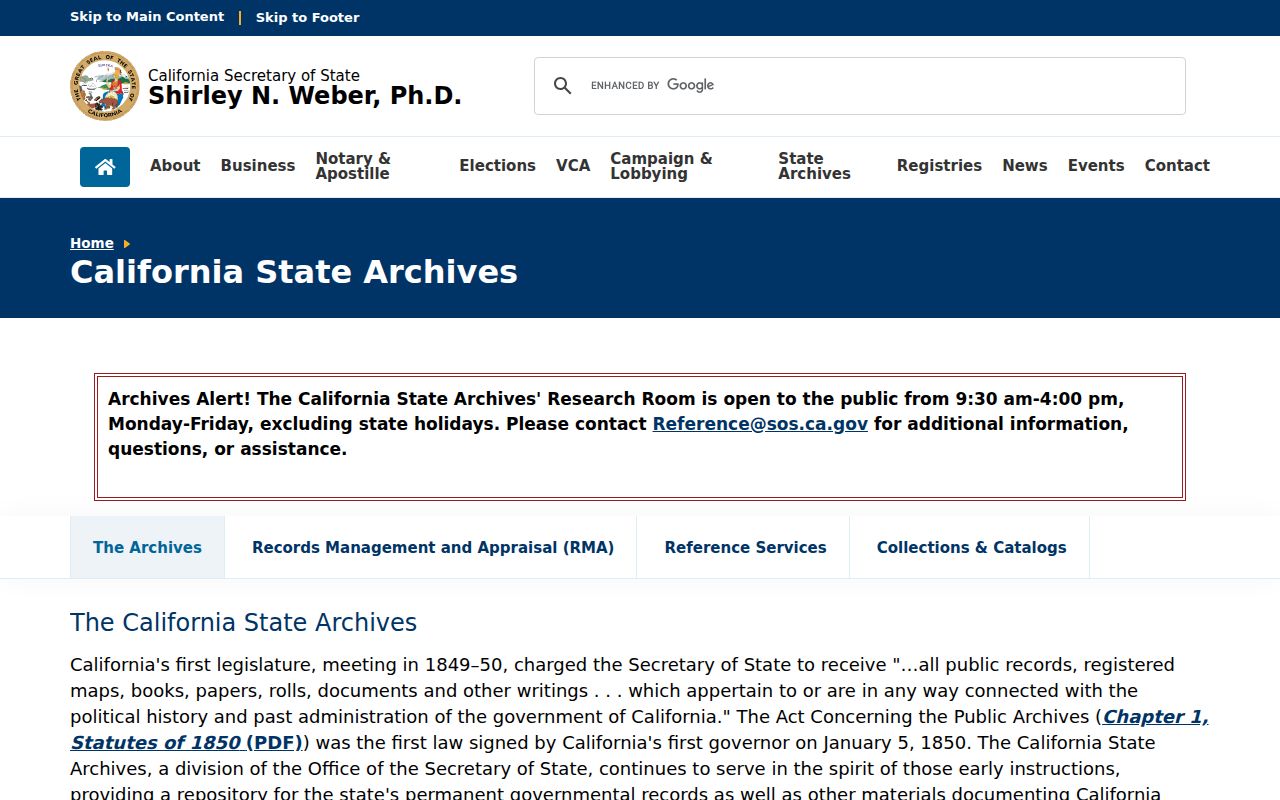
The California State Archives image shows the state-level layer. County books sometimes point beyond the local shelf. A state-government file or finding aid can extend the trail. Browse California State Archives access information when that happens. A missing year is never proof that no directory was published.
Full details live in the Lompoc city directory collections. The short version stays simple. Capture the volume, year, page, name spelling, address, trade or civic role, and any abbreviation key before comparing adjacent years.
Lompoc Postal Geography Versus City Lines
A postal city label settles nothing about jurisdiction. ZIP 93436 covers the main Lompoc delivery area plus Mission Hills, Vandenberg Village, and rural valley addresses. ZIP 93437 serves Vandenberg Space Force Base and the coastal federal installation. ZIP 93438 is just a box ZIP. It has no geography. Use the USPS ZIP Code Lookup to verify a specific address. Do not trust any list.
The Lompoc Post Office at 801 W Ocean Avenue anchors these destination groupings. ZIP geography, Census ZCTAs, incorporated boundaries, county parcels, and federal installations never share one line. Pick the custodian from the jurisdiction GIS actually returns. An envelope's postal city is not enough.
No official local portal offers a complete ZIP-wide resident search. The assessor takes APN, house, unit, and street but no ZIP filter. My Voter Status sits behind identity checks. The recorder keys its tools by name, document, map, and legal clues. Build a validated address set from USPS and GIS first. Then query each address or parcel on its own.
Note: Burton Ranch Annexation No. 70 took effect May 31, 2007, so a modern address can cross an older city-boundary map without any claim that its ZIP changed.
Lompoc Privacy Choices in 2026
California privacy tools sit beside the records trail. Safe at Home offers a substitute mailing address. It also gives confidential handling to eligible survivors and threatened people. The program does not erase records retroactively. Nor does it bind every federal or private entity. Confidential voter rules and certain protections for public officials can still narrow what an ordinary search exposes.
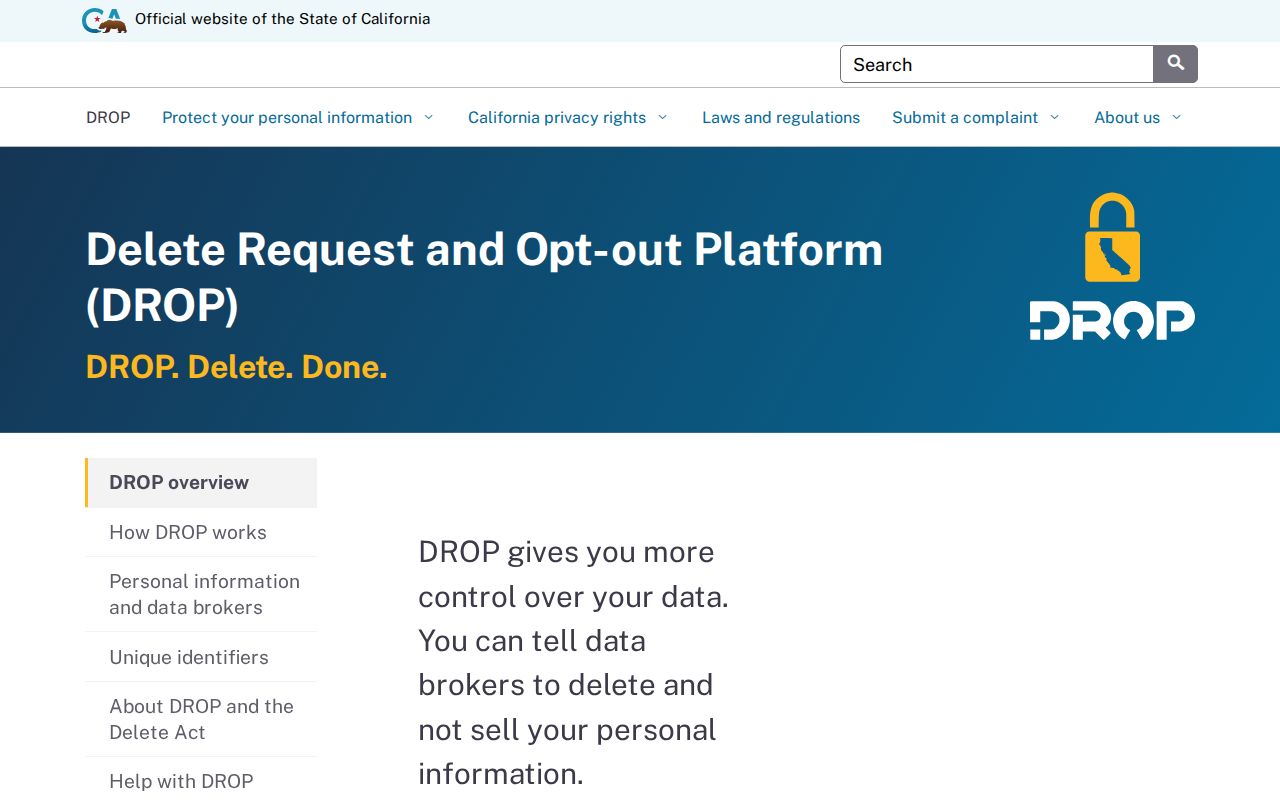
The Delete Act built the DROP platform, which opened January 1, 2026. Brokers began processing recurring deletion requests August 1, 2026. Those requests must recur at least every 45 days. DROP is the official route for a verified California deletion request to registered data brokers. State privacy guidance also spells out rights to know, delete, and correct records, opt out of sale or sharing, and limit certain sensitive-information uses.
The image shows the state privacy request route. Open California DROP to begin, follow the current verification steps, keep your confirmation, and recheck the result.
Official records live with their custodians. Send any correction or access question there. A private directory reference cannot delete or amend what a county, city, court, or elections office keeps.
Error Control for Lompoc Name Searches
Same-name risk rises fast. A search that crosses deeds, courts, licenses, business filings, and OCR newspapers can pull in strangers. They share a surname. The recorder's advanced syntax broadens an old spelling with sound-alike or fuzzy terms. The SBCGS database recommends alternate spellings, nicknames, and role keywords. Search each part of a compound or hyphenated name. But never draw conclusions from a name pattern or an assumed identity.
A reliable match needs two independent anchors at least. A parcel plus a legal description beats a name alone. So does a case number with a party role. A business agent address is a business clue, not a residence. A directory entry can guide the search. Yet its absence may mean a missing volume, a changed listing, or a move.
- Roll
- An organized record list, such as a tax or voter record, with a stated keeper and access rule.
- Index
- A finding aid that points to a document or event; it may not contain the full record image.
- Parcel
- A mapped unit of land identified by an APN, with a situs and property facts.
- Criss-cross directory
- A reverse directory arranged by street or householder, when a particular volume includes that section.
Keep a short research log. Track the source, the spelling, and the date. Add each result number and the reason for accepting or rejecting a match; that habit turns the Lompoc residents directory from a pile of names into a traceable record trail.
Lompoc Residents Directory: A Safer Research Trail
Lompoc's records reward a layered approach. The Lompoc Land Company formed in August 1874. The city incorporated in August 1888. The railroad arrived in 1901. A Carnegie grant housed the first Lompoc library in 1911. Because of that spread, land records, census files, newspapers, directories, city papers, and digital portals begin at different points.
Family history and heir questions call for pairing. Match a directory or yearbook clue to a newspaper, a permitted vital record, a probate event, and a recorded instrument. Neighborhood questions start elsewhere. Begin with an APN list and GIS polygons, then describe each record's limits. For privacy, lean on Safe at Home, confidential voter rules, CCPA rights, and DROP without trying to expose a protected address.
Good directory work stays modest. The strongest Lompoc residents directory search separates a current parcel from a historic household and a recorded owner from an occupant. It tells an online index from an official copy. Instead of forcing a partial hit into a claim, it offers the next custodian, the next search field, and the next corroborating source.